


Wine Culture
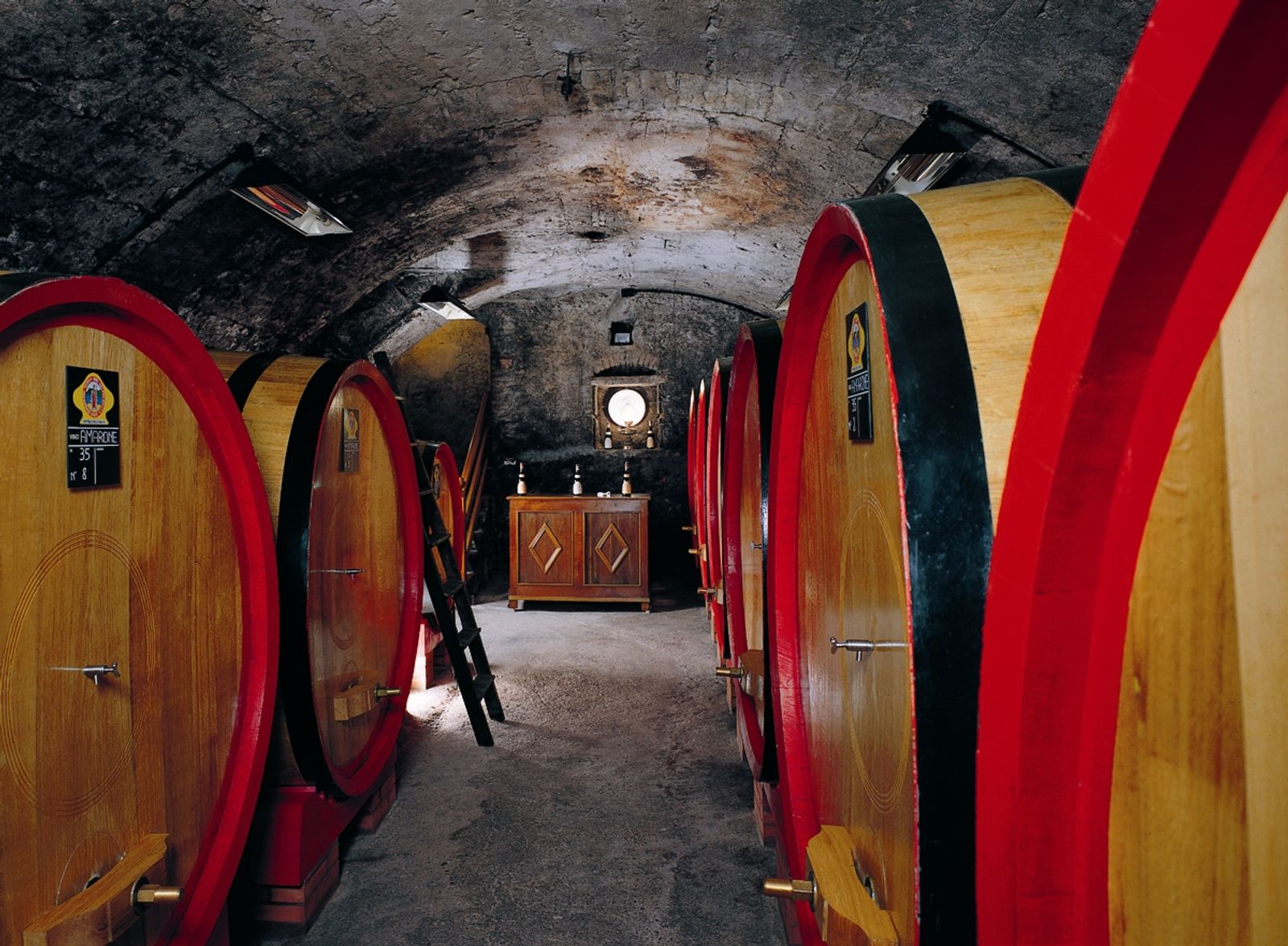
Nobody remembers the barrel room
Why most winery visits are forgotten within three weeks, and what the ones that end up being retold over dinner do differently.
Leggi in italianoLuciana Dias — 7 min — October 2026
The CX Gossip — why an experience works, told the way you'd tell a good piece of gossip.
Saturday night, dinner with friends. Someone asks: "So what did you do this afternoon?"
"We went to a winery up in the hills. Nice. We bought a couple of bottles."
End of story. Nobody asks anything else, and the conversation moves on.
And yet that visit had everything: vineyards on the horizon, a family with three generations of history, an Amarone worth the trip. So why did the story stop at "nice"?
The gossip in this first column is simple: guests don't remember the visit. They remember the story they tell about it. And that story, almost always, is something nobody designed.
The script
We all know it. Welcome. Family history. Winemaking room, stainless steel, a few words about fermentation. Barrel room, the smell of oak, a respectful silence. Four glasses. A price list by the exit.
None of these steps is wrong. The problem is that everyone does them, in the same order. In June, Forbes Italia described this format as easy to follow but leaving little trace (Forbes Italia).
As long as wine tourism was a courtesy, that was enough. Not anymore.
The facts.
- In 2025 wine tourism generated more than €3.1 billion for Italian wineries, on average 21% of their revenue (UniCredit–Nomisma Wine Monitor, via Vinetur).
- In summer 2026, 40% of wineries reported results in line with the previous year, another 40% did worse, and only 20% did better. The ones growing offer curated experiences, easy booking and a relationship after the visit (DNA Tasting, via Beverfood).
- The problem visitors report most has nothing to do with wine: unclear information about opening hours, content and prices, cited by 58% (Garibaldi Report 2025, via Gambero Rosso International).
The reading. The product is there. The demand is there. What is often missing is the design of the experience. And design, unlike talent, can be learned.
The gossip, decoded
There is a book that gives a precise name to what the best wineries do by instinct: Designing Experiences, by J. Robert Rossman and Mathew D. Duerden. Its thesis in one line: great experiences don't happen by chance, they take intention and planning. Four of its ideas are enough to reread the script.
1. The visit is only the second act
Every experience, the authors say, has three phases: anticipation, participation and reflection. Wineries carefully design the second and leave the first and third to chance.
But anticipation is the website that doesn't say how long the visit lasts, the email that arrives three days later, the guest who doesn't know how to get home without driving. And reflection is everything that happens after the exit: the memory, the story, the wish to come back. If the relationship ends at the till, the third phase simply doesn't exist.
2. Memorable is not enough: you need a discovery
The book ranks experiences on five levels. It starts with prosaic experiences, lived on autopilot, and moves up to mindful, memorable (attention plus emotion), meaningful and transformational ones.
The classic winery visit often stops on the lower steps. The interesting leap is from memorable to meaningful, and according to the authors the difference lies in one word: discovery. An experience becomes meaningful when guests discover something, even about themselves. Not "this wine spent 24 months in barrique", but "I had no idea I liked skin-contact whites".
3. The stage has six elements
Rossman and Duerden call the space where an experience happens the experiencescape, and compare it to a stage built from six elements: people, place, objects, rules, relationships and movement. Change one and the whole experience changes.
Let's try it. Same wines, same guide: move the tasting from the tasting room to the vineyard, at sunset. Change the place, and the memory changes with it. Or change a rule: announce at the start that spitting and tasting half pours is perfectly normal. The driver relaxes, the person who doesn't drink feels included. No investment, a different experience.
4. Cake first, then frosting
The book splits the ingredients of an experience into two groups. Technical factors are the cake: clear information, competence, courtesy, punctuality, the ability to recover from a mistake. Artistic factors are the frosting: a theme, a personal touch, the five senses, an object to take home.
The negative example the authors give is the Fyre Festival: all frosting, no cake. Wineries do it on a smaller scale when they invest in a showpiece installation while emails go unanswered. The book adds a line every hospitality manager should pin above their desk: great experiences need great design and great delivery.
And then there is memory. Daniel Kahneman showed that we don't remember an experience by averaging its moments: we mostly remember the peak and the end. In the classic script the peak is the barrel room, which every winery has. The end is the price list. That's why nobody, over dinner, talks about the barrel room.
The new guest doesn't want a lecture
Meanwhile, the people walking into wineries have changed. 58% of visitors are not wine experts (WineNews). And Gen Z, tomorrow's guest, says it out loud.
For Gen Z, wine is conviviality (65%) and sharing (64%). But 51% find it too technical, and 38% admit they don't understand it (Ipsos Doxa–Wine Tourism Hub, via WineNews). They book almost exclusively online, in small groups, and drink more moderately than previous generations (WineNews, Decanter).
The juiciest gossip, though, is something else: Gen Z isn't rejecting wine. It's refusing to feel unprepared in front of it.
And none of its requests is really "young". Plain language, one-click booking, groups small enough to talk, the freedom to drink little: they improve the experience for everyone, including the sixty-year-old collector. Designing for Gen Z doesn't mean adding neon and playlists. It means removing friction.
The script, rewritten
What would the same visit look like if it were designed with these ideas? You don't need a new barrel room. You need decisions.
Before
The script: an email, a reply days later, no directions.
Rewritten: online booking with instant confirmation; the day before, a message that builds anticipation and suggests how to get there without driving.
The idea: the visit starts before the visit.
Welcome
The script: the family history, recited.
Rewritten: a question for the guest: what do you usually drink, what would you like to discover today?
The idea: the guest is the protagonist, the family is the backstory.
The route
The script: winemaking room, barrel room, tasting room: three rooms, the same explanation.
Rewritten: cut whatever adds nothing; vary the pace, the space and the way guests take part.
The idea: removing is a choice; repetition switches attention off.
Rules
The script: unspoken: you drink everything, you listen in silence.
Rewritten: announced: spitting is normal, "naive" questions are welcome.
The idea: change one rule and you change the experience.
The peak
The script: the barrel room, the same as a thousand others.
Rewritten: a signature moment that only exists there: a tasting in the vineyard, a blend to make, a choice to take.
The idea: the peak is chosen, not inherited.
The end
The script: a price list by the exit.
Rewritten: a closing ritual kept separate from the purchase: an object to take home, a goodbye, a reason to come back.
The idea: memory holds on to the end.
After
The script: nothing.
Rewritten: a thank-you within 48 hours, with consent to stay in touch.
The idea: the third phase exists only if you design it.
Here's the point: none of these changes requires new buildings. It only requires asking, at every moment, what should the guest be thinking here?
Worth remembering
- Guests don't remember the visit: they remember the story they tell about it.
- The visit is one phase out of three. The before and the after are designed, or they don't exist.
- The peak and the end outweigh everything else. The barrel room and the price list are neither.
- Memorable is the minimum. Meaningful is when guests discover something.
- Cake first, then frosting.
- What Gen Z needs makes the experience better for everyone.
A question for anyone who welcomes guests at a winery: what's the sentence your guests say over dinner, that same evening? If you don't know it, that's where to start.
In the next columns of The CX Gossip we'll read real cases through these lenses, and introduce the method Gossip Wine uses to design its own experiences. If you run a winery and want to find out what your guests say about you, write to us.
The Gossip Letter
Stay curious about wine.
New bottles, changing rituals and the people reshaping contemporary wine culture.
Keep exploring
Good stories deserve a second round.