

Venice Carnival: sparkling and fascinating origin
Have you heard Venice Carnival? Filled with wonderful masks and dresses, the fascinating present event has as much enchanting origins.
Carnival is just around the corner, and we explore a way to know the origin of the magnificent Venice Carnival: between masks balls and open air spectacle, there is a worldly and political history.
Venice Carnival was Inspired by the Greco-Roman festivities, the then Republic of Venice gave the low-income population a period of irreverent fun.
The use of masks was allowed to grant total anonymity and to avoid the existing division of social classes.
This generous gesture of the Republic of Venice was to avoid a period of tension and conflict, to distract the public to give a light to a severe period of punishment and high demands of the population.
By wearing masks and fantasies, it was possible to completely conceal the identity and thus any form of personal membership of social classes, sex or religion was nullified.
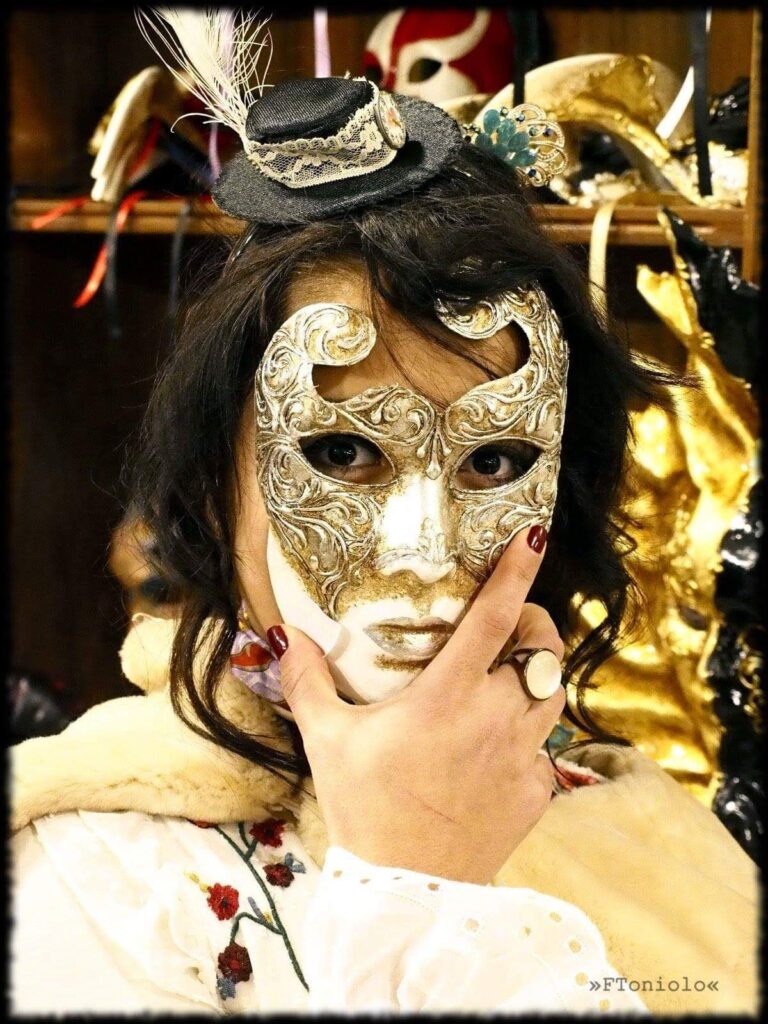
Everyone could establish attitudes and behaviors based on new customs and modified appearance.
For this reason, the greeting that resonated continuously in the act of crossing a new “character” was simply the mask of the good lady.
There was many acrobats, dancers, magicians in the carnival of Venice. The fun was so much that the work was left out.
For many centuries, the carnival had a long duration, but I’m talking about well 6 weeks, from December 26 to Ash Wednesday
Venice Carnival and wine?
They paid homage to the god of Wine, Bacco in Italian or Dionysus in Greek, theater plays and presentations in honor of wine and fun.
From there came the great masked balls, in beautiful Venetian palaces, so it became famous worldwide since the 18th century.
The most transgressive feasts came at sunset. Acts of low moral began to radiate through the city of Venice, violence and exchanges of fantasies.
Anonymity is no longer something to rise from problems, but rather to acts of vandalism and libidinization.
These acts and the fall of the Republic of Venice contributed to the closing of the carnival celebrations.
The date of the last carnival of Venice è in the year of 1797, with the Napoleonic invasion, came the abolition to the carnival during two centuries.
It was not until 1967 that Carnival celebrations began, with the return of customs and dances, and that it is still successful to this day.
What to prepare to this Carnival?
In Italy though, the celebration of Carnevale goes as far back as 1094, meaning that we are taking part in a tradition that’s nearly one thousand years in the making. In street parades across the Mediterranean countryside, Carnival is one of the best ways to experience Italian culture and cuisine.
As we are in Veneto Region, the traditional food is Crostoli
Arrange the flour on a shelf, add the sugar, lard or softened butter, grappa and eggs.
Knead with your hands until you get a homogeneous and elastic dough.
(1) Divide the dough into three parts and roll out each one with the help of a rolling pin making sheets of about 3mm thick.
(2) Then make rectangles from the pastry, using a notched wheel, and make a central cut on each rectangle.
No Carnival celebration would be complete without sweet desserts. These fried pastries, sometimes called Angel Wings, are known by different names throughout Italy (like cenci or chiaccherre).
- Pair it with: Prosecco!

